The art of replicating the patina of ancient bronzeware has long fascinated historians, artisans, and collectors alike. The distinctive hues of oxidized copper—ranging from verdigris greens to deep malachite blues—tell silent stories of time’s passage. Modern techniques for dyeing and artificially aging metals seek to emulate these natural processes, not just for restoration but also for contemporary artistic expression. The interplay between chemistry and craftsmanship in this field reveals a delicate balance between science and tradition.
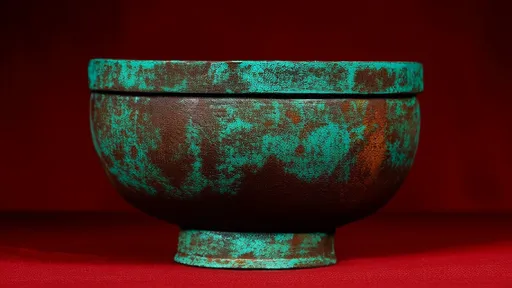
Bronze, an alloy primarily composed of copper and tin, develops its characteristic patina through centuries of exposure to moisture, salts, and atmospheric gases. The most recognizable coloration—the sea-green of verdigris—forms when copper reacts with acetic acid, often from organic decay in burial environments. Other shades, like the inky blues of azurite or the earthy reds of cuprite, emerge under different chemical conditions. These colors aren’t merely aesthetic; they serve as a timeline, documenting the object’s interactions with its environment.
Contemporary patination techniques aim to replicate these effects within days or weeks rather than millennia. Artisans employ a variety of methods, from controlled chemical baths to layered applications of pigments and heat treatments. One approach involves using ammonium sulfide or potassium sulfide to induce rapid sulfidation, mimicking the blackish-brown tones of aged bronze. For green hues, copper acetate or vinegar-soaked cloths are wrapped around the metal, accelerating oxidation. The challenge lies in achieving irregular, organic-looking patterns rather than uniform coatings—a hallmark of genuine antiquity.
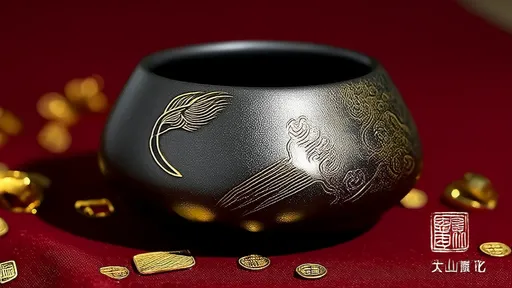
Beyond restoration, synthetic patination has found a niche in decorative arts and jewelry. Designers leverage these techniques to create pieces that evoke the weight of history while maintaining structural integrity. A bracelet might bear the turquoise streaks of an excavated artifact, or a sculpture could replicate the mottled greens of a Zhou dynasty vessel. This demand has spurred innovation in dye formulations, with some studios developing proprietary solutions that combine natural pigments with synthetic binders for enhanced durability.
The ethics of artificial aging remain debated among conservators. While few object to its use in contemporary art, applying these methods to genuine antiquities—even for repair—can blur the line between preservation and forgery. Museums often insist on distinguishable repairs, opting for reversible materials that don’t alter the original surface chemistry. Yet in private collections, the preference sometimes leans toward seamless visual harmony, prioritizing aesthetics over strict archaeological accuracy.
Scientific analysis plays an increasingly vital role in both creating and detecting artificial patinas. X-ray fluorescence (XRF) and Raman spectroscopy can identify synthetic compounds that differ from naturally formed corrosion layers. Paradoxically, this technology also aids artisans in refining their methods to better match historical benchmarks. Some workshops now use spectral data from ancient artifacts to calibrate their dyeing processes, creating reproductions that withstand professional scrutiny.
Cultural perspectives on patina vary widely. In Western traditions, the green oxidation of bronze is often romanticized as a symbol of antiquity, whereas some East Asian practices favor polished surfaces, associating patina with neglect. These differences influence modern techniques; a Japanese craftsman might focus on preserving the metal’s original luster, while an Italian restorer painstakingly replicates every speck of corrosion. Such diversity underscores patination as not just a technical process but a cultural dialogue.
The future of bronze patination may lie in sustainable innovation. Traditional methods often involve toxic chemicals like mercury or strong acids, prompting a shift toward eco-friendly alternatives. Plant-based mordants, electrochemical aging, and even microbial treatments are being explored. One experimental approach uses bacteria to deposit copper sulfides, mirroring natural underground conditions. As environmental regulations tighten, these green technologies could redefine how we emulate time’s touch on metal.
Ultimately, the replication of bronze oxidation colors bridges past and present. It allows modern hands to hold something that feels ancient, to weave continuity between eras. Whether for scholarship, art, or commerce, this craft speaks to humanity’s enduring desire to touch—and recreate—the passage of time.
By /Jul 25, 2025

By /Jul 25, 2025

By /Jul 25, 2025

By /Jul 25, 2025

By /Jul 25, 2025

By /Jul 25, 2025

By /Jul 25, 2025
By /Jul 25, 2025
By /Jul 25, 2025

By /Jul 25, 2025

By /Jul 25, 2025

By /Jul 25, 2025

By /Jul 25, 2025

By /Jul 25, 2025

By /Jul 25, 2025

By /Jul 25, 2025

By /Jul 25, 2025

By /Jul 25, 2025
By /Jul 25, 2025
By /Jul 25, 2025